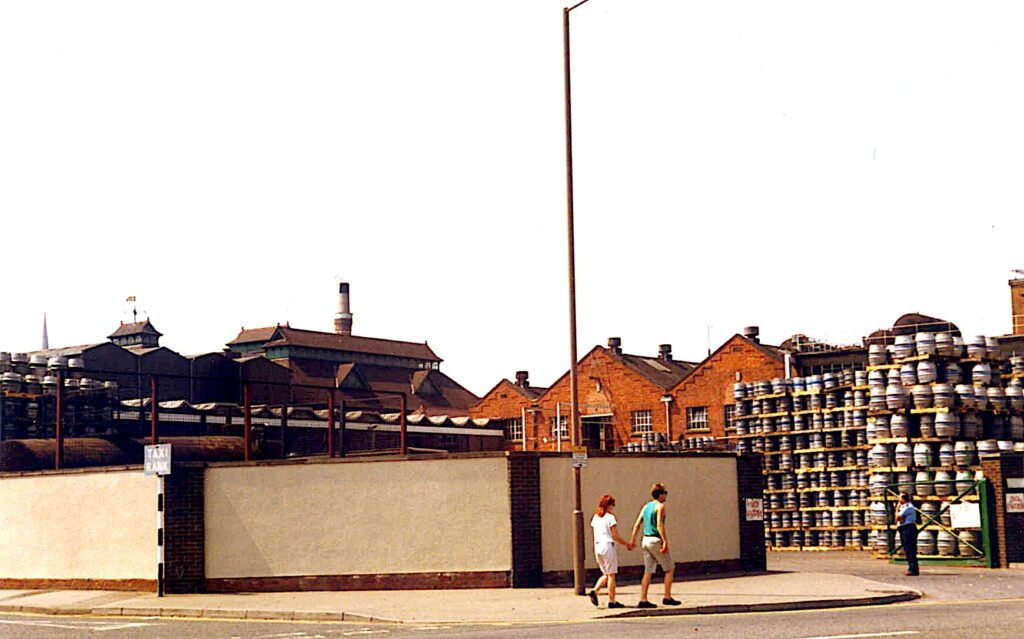
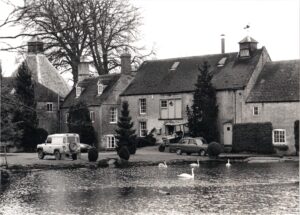
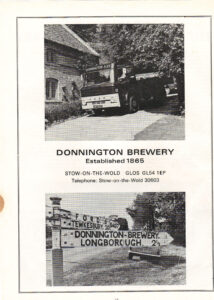
The summer of 1975 was blessed with good weather, not as hot as the famous 1976 protracted heatwave, but ideal conditions to go out countywide exploring Gloucestershire’s pubs and finding out where traditional draught beer might still be found. It was discovered that although Whitbread pubs dominated there was a high concentration of Courage pubs in the far east of the county, a legacy of the takeover of the Cirencester Brewery by Simonds of Reading. There were scattered tied houses belonging to Wadworth of Devizes, a handful of Arkell’s of Swindon pubs around Cirencester and just two Hook Norton pubs in the extreme north-east of the county in Moreton-in-Marsh and Churchill. At that time very few pubs were genuine free houses, and those that existed were often contented to serve keg instead of cask. The jewel in the crown, then as now, was the scattering of picturesque Donnington Brewery pubs in the Cotswolds but, back in the mid 1970’s, most of their 17 pubs sold BB & SBA under gas pressure.
By far the most easily found real ale in Gloucestershire was West Country Pale Ale (WCPA), dispensed from squeaky old beer engines jostling for space between illuminated Trophy and Tankard fonts. More than often, however, WCPA was served under pressure emerging on the bar in an unassuming plain square plastic box in the shadow of the national keg brands. The heritage and association with Cheltenham brewery were then further diminished with the rebranding of the local beer as Whitbread PA. It was a well-liked session beer, akin to a light mild, and with a low gravity of just 3% ABV was known as the choice for drivers venturing out in their cars to visit isolated pubs. CAMRA described Whitbread PA with derision in the 1976 Good Beer Guide as ‘bland and unspectacular’.
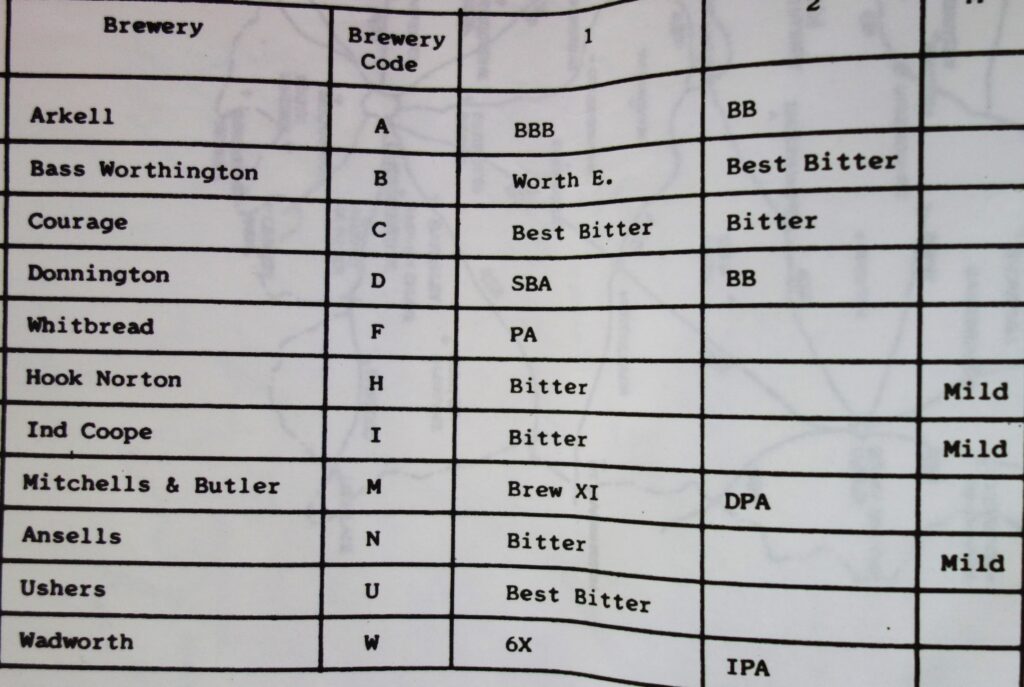
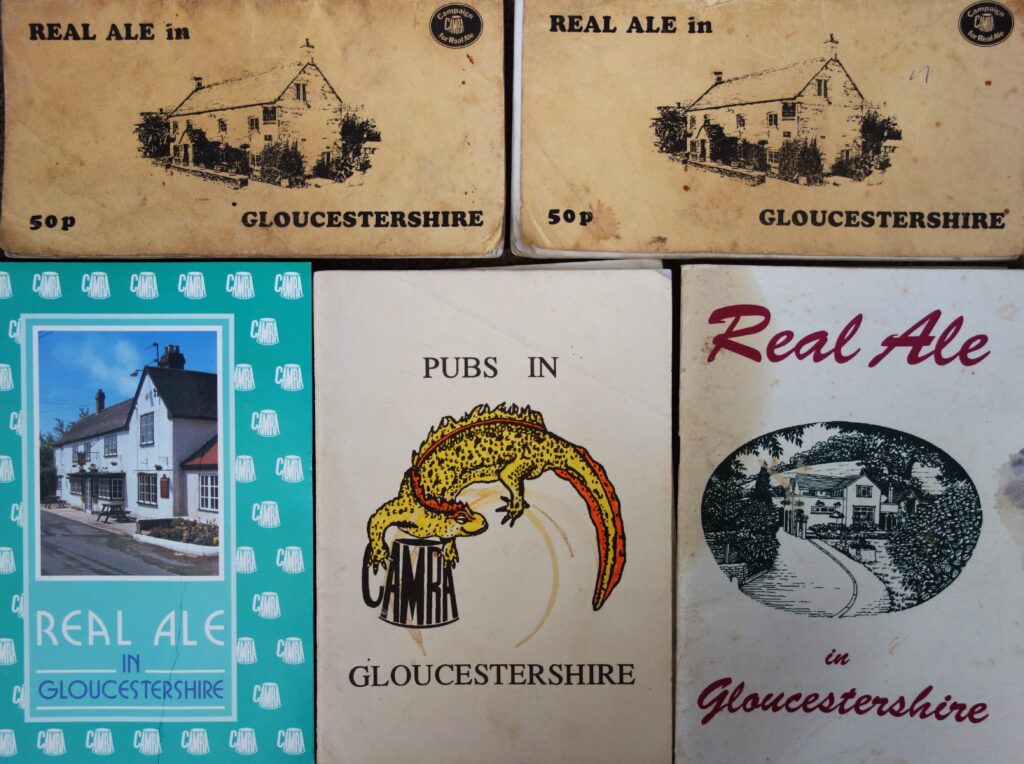
The pub explorations of 1975 were processed into what was to become the first provisional edition of ‘Real Ale in Gloucestershire’ issued as a stapled eight-page A4 size guide in January 1976. Priced just 10p. A total of 188 pubs were surveyed throughout Gloucestershire. Alarmingly 127 pubs were either tied or sold Whitbread (West Country) PA. Those early stalwarts searching for the best beers to drink in the county only found 17 beers from possibly 10 breweries: Ansells Bitter & Mild (Noel Arms, Chipping Campden); Arkells 2B, 3B (Highwayman, Elkstone), M&B Brew XI and Worthington E (AKA Draught Bass), Ind Coope Bitter & Mild (Royal Union, Cheltenham); Courage Bitter and Best; Donnington BB and SBA; Hook Norton Best Bitter and Mild; Wadworth IPA and 6X (with Old Timer in Winter), Whitbread WCPA, and Ushers Best Bitter.
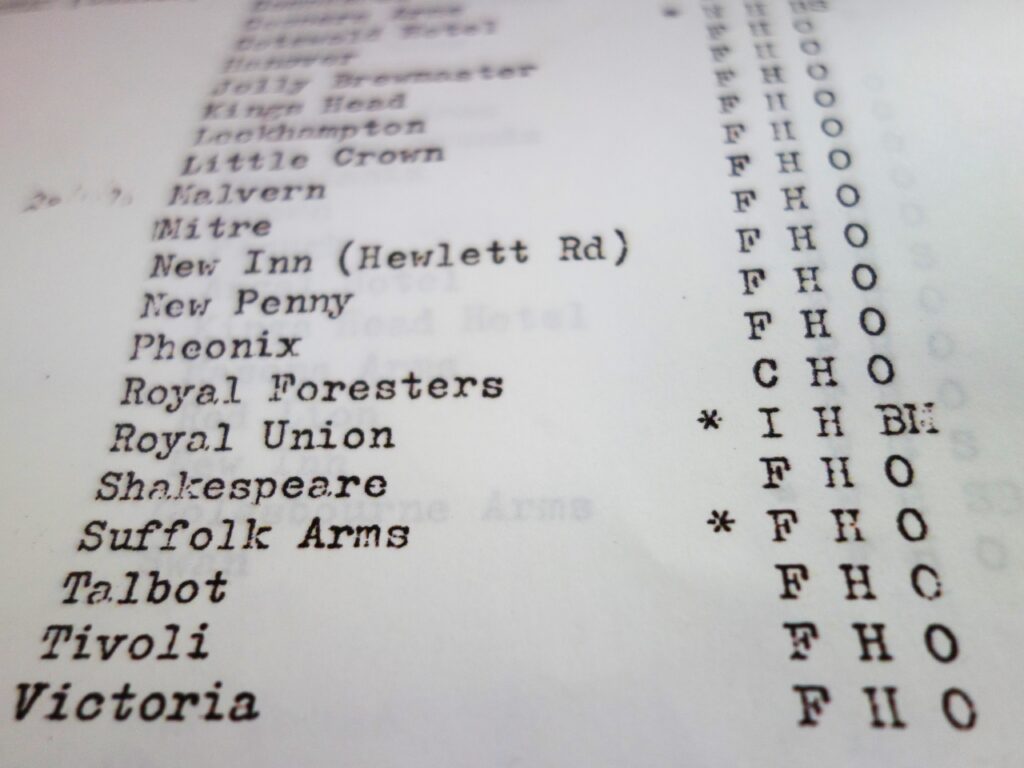
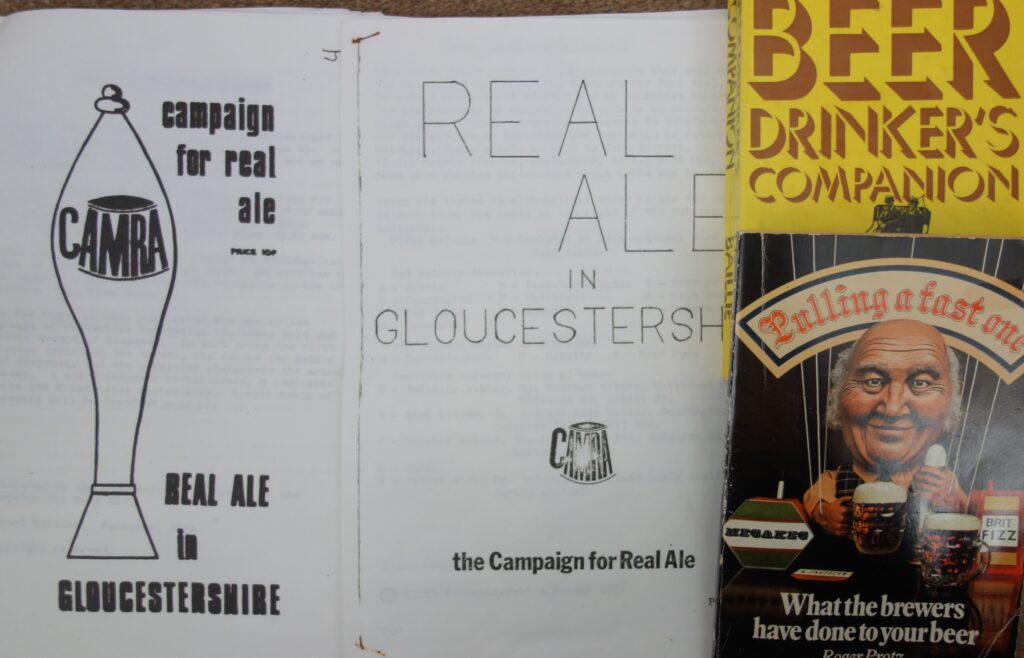
It is a disturbing and sobering thought that of those 188 pubs surveyed in 1975, 85 have since closed for good. Some have long been forgotten, like the Talbot Inn in Cheltenham, the Heywood in Cinderford, the Red Lion in Gloucester, the Star in Slad, the George at Yorkley and the Anchor in Stroud. Other closed pubs may be remembered with some affection such as the Seven Tuns in Chedworth or the County Arms in Gloucester.
Three years later in July 1978, the local CAMRA branch released an updated ‘Real Ale in Gloucestershire’ featuring ales from Davenports, Devenish, Eldridge Pope, Greene King, Holdens, Marston’s, Morland, Penhros, Samuel Smith, and Theakstons. The 1980’s proved to be a boom time for the resurgence of real ale. The Cheltenham brewery was rebranded as the Flowers Brewery complete with the old William Shakespeare logo, albeit some 35 miles or so from its original Stratford on Avon home. Ind Coope pubs disappeared to be re-imagined as Halls Oxford & West Brewery, and even the infamous and much ridiculed Watneys Red Barrel keg beer was discontinued. It seemed that CAMRA had not only fought the battle but had won the war. Then came the Competition Commission’s ‘Beer Orders’ of 1989, a well-meant initiative to reduce the number of large breweries’ tied estates to create a fairer and wider choice of beer for pub customers. From that legislation sprung the pub companies (Pub Co’s) such as Punch and Enterprise Inns, that have dominated and manipulated the pub scene ever since. But that’s another story and a CAMRA campaign to be explored another time.